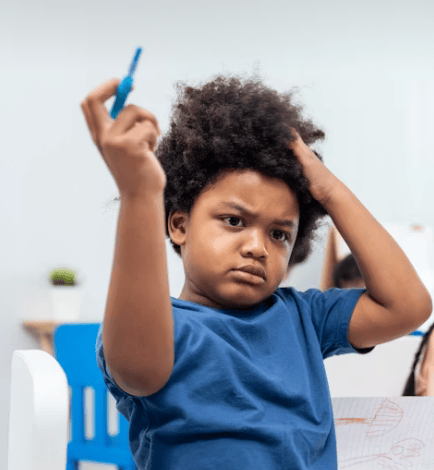
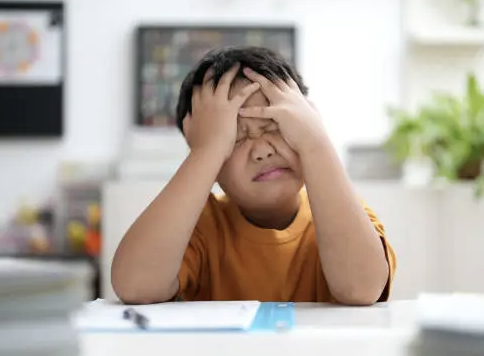
Ye Aisa Kyon Hai?
Ye Aisi Kyon Hai?
“If there is anything that we wish to change in the child, we should first examine it and see whether it is not something that could be better changed in ourselves.”
— Carl Gustav Jung
We have heard it from parents, grandparents, relatives, neighbours, friends:
“Ye aise kyon karti hai?” • “Itna gussa kahan se aata hai isme?” • “Yeh toh bilkul sunta nahin. Bahut ziddi hai.”
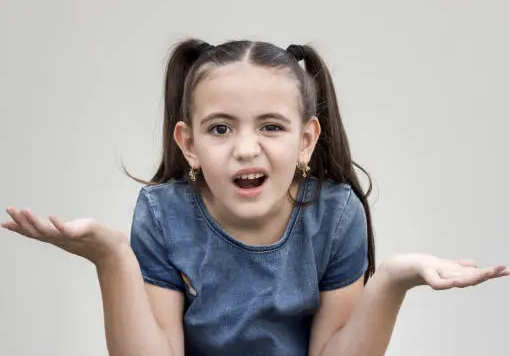
The Mirror We Don’t Want to Look Into
Here’s something uncomfortable:
Your child is not misbehaving. Your child is reflecting.
Every habit, every reaction, every word your child uses was absorbed from somewhere. Not from a classroom. Not from a book. It came from home. From you. From the way you speak when you are tired. From the way arguments play out at home. From what you do when things don’t go your way.
Children are not listening to your instructions. They are watching you.
Observation Is Their Superpower
From the moment a child enters this world, they are learning not through textbooks, not through lectures, but through pure, simple observation.
They watch how you greet people. They watch how you react when you’re stuck in traffic. They watch how you talk to your spouse after a long day. They watch what you do when you are angry, anxious or afraid. They watch whether you apologize when you are wrong. They watch whether you keep your promises.
And then, quietly, naturally, without any effort, they become it.
Not because they want to rebel. Not because they are difficult, but because this is how humans are wired. The child’s first school is not a building. It is the home. The first teachers are their parents.
<img src="https://drsonalshomeopathy.com/wp-content/uploads/2026/09/screenshot-2026-09-29-at-16.17.51.png" alt="Screenshot 2026-09-29 at 16.17.51" style="width:100%;max-width:100%;height:70%;border-radius:14px;margin:24px 0;display:block;margin-left:auto;margin-right:auto"“Maine Toh Nahi Sikhaya Isko Ye Sab…”
That’s exactly the point.
You didn’t teach it. They caught it.
The sharp tongue. The avoidance of difficult conversations. The anxiety about money. The habit of complaining. The lack of patience. The way stress is taken out on family members or people around.
Children don’t need to be taught these things. They absorb them from the emotional climate of their surroundings.
But here’s the other side, and this is important:
The same child also absorbs kindness when they see it at home. They absorb resilience when they watch a parent handle failure with grace. They absorb empathy when they see disagreements resolved with respect. They absorb confidence when they are spoken to with respect.
The home either plants seeds of strength or seeds of fear. Rarely neither. 🌱
What Happens in Moments of Conflict
Pay close attention to how you behave under pressure, because that is what your child will normalize.
When parents scream during an argument, children learn that volume is authority. When problems are met with silence and shutdown, children learn that emotions are dangerous. When blame is the first response to every mistake, children learn that being wrong is shameful. When grudges are held and apologies are never given, children learn that pride matters more than relationships.
But when a parent takes a breath before responding, the child learns regulation. When a parent says “I was wrong, I’m sorry,” the child learns accountability. When two people disagree but still treat each other with respect, that child learns that love and conflict can coexist.
These are not small lessons. These are the foundations of a human being.
<img src="https://drsonalshomeopathy.com/wp-content/uploads/2026/09/screenshot-2026-09-29-at-16.14.35.png" alt="Screenshot 2026-09-29 at 16.17.51" style="width:100%;max-width:100%;height:70%;border-radius:14px;margin:24px 0;display:block;margin-left:auto;margin-right:auto"The Parent Guilt: “Toh Kya Hum Galat Hain?”
Not wrong. Just human.
No parent is perfect. No home is perfect. Every family has its chaos, its wounds, its unsaid things. That is not the problem.
The problem is when we expect the child to change without ever turning the lens around.
Carl Jung didn’t say this to shame parents. He said it as an eye-opener to look inward first. To ask not “What is wrong with my child?” but “What is my child trying to show me about myself?”
Because so often, the behaviour we find most frustrating in our children is the behaviour we ourselves have not yet healed.
The impatience. The anger. The need to always be right. The fear of failure. The inability to say “It’s my mistake,” “I am sorry,” “I love you.”
The Most Powerful Thing We Can Do as a Parent
Working on ourselves. 💪
Introspect. Reflect. Have honest conversations with your partner. Acknowledge your own triggers. Practice what you preach, or just practice and let your children watch.
You don’t have to be a perfect parent. You just have to be an evolving one.
Because the child who watches a parent try, who watches them stumble and get back up, who sees them choose kindness on a hard day, who hears them say “main bhi seekh raha hoon”, that child learns something no school can ever teach.
<img src="https://drsonalshomeopathy.com/wp-content/uploads/2026/09/ganesh-chaturthi-wishes-flyer-3.png" alt="Ganesh Chaturthi wishes flyer-3" style="width:100%;max-width:90%;height:50%;border-radius:14px;margin:24px 0;display:block;margin-left:auto;margin-right:auto"Before We Ask “Ye Aise Kyon Karta Hai?”
Let’s ask ourselves:
- Have they seen me behave this way?
- What emotions are allowed to be expressed in our home?
- How do I handle my own anger, fear, or disappointment?
- What does love look like in our house, every single day?
- Am I the person I want my child to become?
These are hard questions. They are also the most important ones.
Your child is not a problem to be solved. They are a mirror being held up gently, innocently, honestly.
What they reflect is not a judgment. It is an opportunity. To reflect. To evolve. To improvise. For their sake and yours.
It is a parent who is brave enough to look in the mirror. 🪞
Share this if it made you pause and think. 💛
And if you have a moment, I’d love to hear in the comments about something your child reflected back to you.


Leave a comment